
Italy has become one of the fastest-growing study destinations for Kenyan students; and for good reason. Affordable tuition fees, world-renowned universities, generous scholarships and more than 1,250 English-taught programmes have made studying in Italy more accessible than ever.
But there is one question almost every student asks before making the move: “If my degree is taught in English, do I really need to learn Italian?” The short answer is yes.
While you can successfully complete your degree in English, learning basic Italian will significantly improve your student experience, increase your employment opportunities and help you integrate into Italian society.
If you’re planning to study in Italy from Kenya, here’s why learning Italian is one of the smartest investments you can make before you travel.
1. English Will Help You in Class—Italian Will Help You in Life
Most universities offering international programmes teach lectures, assignments and examinations in English. However, once you leave the classroom, Italy speaks Italian.
Whether you’re:
- Shopping at the supermarket
- Buying groceries at the local market
- Asking for directions
- Visiting a hospital or pharmacy
- Using public transport
- Renting accommodation
- Opening a bank account
- Visiting government offices
you’ll quickly realise that everyday life happens in Italian.
Unlike countries such as Kenya, where English is widely spoken alongside Kiswahili, many Italians communicate almost exclusively in Italian, especially outside major tourist areas. Learning the language helps you become more confident, independent and comfortable in your new environment.
2. Learning Italian Makes It Easier to Find a Part-Time Job

One of the biggest advantages of studying in Italy is that international students can work while pursuing their studies, subject to the country’s student visa regulations.
Many Kenyan students take up part-time jobs to gain work experience and help cover living expenses.
These opportunities often include:
- Restaurants and cafés
- Hotels
- Retail stores
- Customer service
- Warehouses and logistics
- Tourism
- Administrative support
While some international companies operate in English, many employers prefer candidates who can communicate with customers and colleagues in Italian. Even a basic understanding of the language can make you a much stronger candidate when applying for part-time jobs.
Simply put: The better your Italian, the wider your employment opportunities become.
3. Italian Helps You Build a Career After Graduation
Many students choose Italy not only because of its affordable education but also because they hope to build international careers after graduating.
Italy is one of Europe’s largest economies and is home to globally recognised companies in sectors such as:
- Engineering
- Manufacturing
- Fashion
- Hospitality
- Healthcare
- Automotive
- Technology
- Business
Although multinational companies may use English in professional settings, day-to-day communication with colleagues, clients and suppliers is often conducted in Italian.
Being bilingual gives you a competitive advantage and demonstrates your commitment to integrating into the local workplace.
4. You’ll Feel More at Home
Moving to another country is exciting, but it can also be overwhelming. Learning even basic Italian before you travel can make the transition much easier.
Simple conversations such as:
- Introducing yourself
- Ordering food
- Asking for directions
- Speaking to neighbours
- Shopping
- Booking appointments
- Understanding announcements
can help you settle into your new community faster and reduce the stress that many international students experience during their first few months abroad. Language isn’t just about communication, it’s about confidence.
5. It Shows Respect for the Local Culture
Italians are known for their rich culture, hospitality and strong sense of identity. Making an effort to learn their language is often appreciated and can help you build stronger friendships and professional relationships.
Whether you’re speaking to a lecturer, a landlord, a classmate or a customer at work, even basic Italian shows respect and willingness to integrate. These small interactions often lead to bigger opportunities.
Do You Need to Be Fluent?
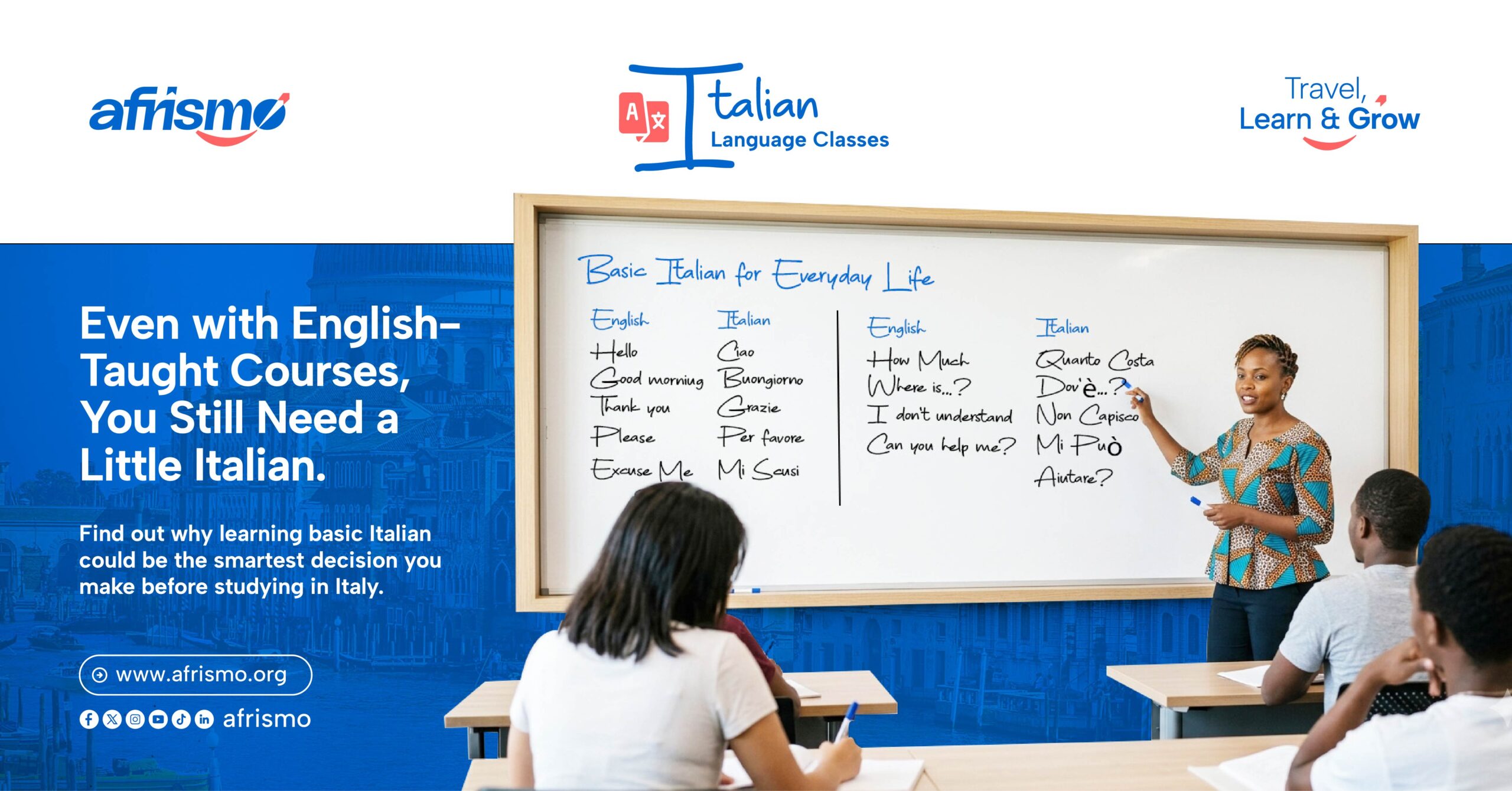
Not at all. You don’t need to master Italian before you arrive. Start with the basics:
- Everyday greetings and conversations
- Numbers and dates
- Shopping and ordering
- Asking for directions
- Common workplace phrases
Once you’re in Italy, you’ll naturally improve through everyday interactions.
AFRISMO Helps You Prepare
At AFRISMO, we believe preparing for Italy goes beyond securing university admission. That’s why basic Italian language classes are included in our student support.
Alongside university placement, scholarship guidance, visa support, accommodation and settlement assistance, we help you prepare for both your studies and your life in Italy.
Your Degree May Be in English, But Your Future Is in Italy
Learning Italian makes it easier to communicate, build relationships, find opportunities and settle into everyday life. If you’re serious about studying in Italy from Kenya, don’t just prepare for university. Prepare for life in Italy.
Ready to Study in Italy?
Let AFRISMO guide you from university selection and applications to scholarships, visa support, accommodation and basic Italian classes.
Book your consultation today and take the first step towards studying, living and thriving in Italy.